

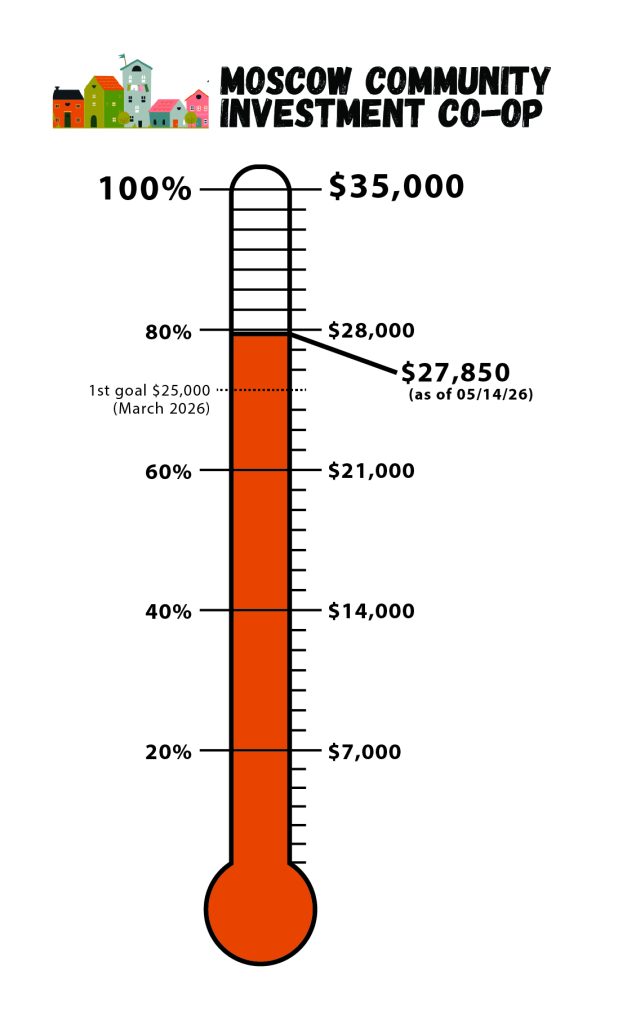
| MCIC May Update – Tuesday, May 18, 2026 Preparing for our Stock Offerings MCIC is advancing to the next major step in its development by registering its stock offering in Idaho under SCOR (Small Company Offering Registration) rules. Because a property investment cooperative with a proposed share structure like MCIC is very unique, we must register the stock offering at the state level with the Idaho Securities Bureau. We are preparing the initial registration requirements, including securities offered, business prospectus, disclosures, and a financial review. We are utilizing legal securities expertise to assist with and review the registration filing and offering, and will engage our accounting service for the necessary financial review or audit. Our goal is to obtain approval from the State of Idaho for the registration of a stock offering. Meeting that legal requirement will allow MCIC to accept member applications and to start selling shares to capitalize our endeavor. We will continue to keep pledges and supporters informed via the website, monthly newsletter updates, and other communications when needed. Please feel free to reach out at any time with concerns or questions. Fundraising Update MCIC has received $27,850 in direct donations toward start‑up costs! A heartfelt thank you to the 73 couples and individuals, the IGNITE grant, and Moscow Food Co-op, for their contributions. Your generosity is what makes this cooperative possible! As we move forward, we want to share a brief update on our start-up budget. We have increased our start-up cost target to $35,000. This adjustment reflects the complexity and rigor of registering our stock offering in Idaho under Small Company Offering Registration (SCOR) rules. This process has proven more involved than initially anticipated. Navigating securities law at this level requires specialized legal securities expertise, and ensuring full compliance means investing the time and resources to do it right. We believe this careful, thorough approach is essential to protecting our members and setting MCIC on a strong legal foundation from day one. Since forming MCIC, we have spent approximately $8,500 on the foundational work needed to get our stock offering off the ground — things like required government filings, hiring financial and legal professionals, and putting the right systems in place to run a proper stock offering. Looking ahead, we are also budgeting for the planning and execution of our upcoming capital campaign. Every dollar spent is reviewed and tracked carefully by our leadership team. By covering these start-up costs through donations now, we can make sure that the money raised through our stock offering goes directly toward what matters most — purchasing real estate for our community. We are grateful for your continued patience and support as we work through this process. If you’d like to help us reach our updated goal, contributions to start‑up costs can be made by checks payable to MCIC and mailed to: MCIC PO BOX 8445, Moscow, ID 83843. MCIC Member Stats (as of 04/28/26) 349 Member Pledges (@ $1k each, totaling $349,000) 68 Additional Investment Pledges 53 of the 68 pledges totaled between $183,000 to $194,000 (some pledges provided a firm number and some a range of additional investment) The remaining 15 of the 68 pledges are “TBD.” 62 of the 68 pledges are local to Latah County 6 of the 68 pledges reside in Idaho, but outside Latah County TOTAL Maximum Pledges: $543,000 Board Member Spotlight Philip Shinn – Secretary and Co-Chair of the Finance Committee Phil retired after 32 years as the manager and CEO of Triad News Publishing, Inc., the publisher of the Moneysaver free community paper, with printing and Internet divisions. During his tenure, the company grew from one full-time employee to thirty. He held leadership roles in both regional and national trade associations. In retirement, he was fortunate to follow his avocation as Lewiston’s Urban Forester for a few years. He has invested in commercial and residential real estate. Shinn received gubernatorial appointments to a state arts commission and a statewide recreation task force. He served on a city commission and chaired it for 8 years. A non-profit he founded helped the city of Lewiston receive grants for park development and helped acquire seven parcels of real estate to build a 40-acre park. He has volunteered as a director and officer on several other non-profit boards. Since 2019, he and his wife, Evelyn, have volunteered with Xerces Society, catching, photographing, identifying, and releasing bumble bees. Phil is excited to have a role, as Secretary, in developing the democratic opportunity for commercial property ownership in Moscow that MCIC will become.  Welcome, new Board Members! We are delighted to welcome Whit Schroeder and Ross Warren to our Board of Directors! They will join us in June and bring valuable expertise in IT, outreach, and strategic planning. Cooperative Principle of the Month Principle #4: We celebrate diverse forms of expression from many cultures and traditions. MCIC puts Principle #4 into practice by using local, democratic ownership to shape spaces that reflect the community’s cultural diversity. By supporting locally rooted businesses and lowering barriers for participation, the co-op helps ensure development represents many voices, not just outside investors. Why People Are Pledging “We have pledged to MCIC and are eager to join together with so many others in our community to play a part in the future of our downtown through property ownership at a time where real estate pricing is unreachable for most. By pooling our resources, investment opportunities and decisions that preserve the vibrant and varied character of our downtown is achievable.” – Jack and Brandy Sullivan  Real Estate Fact of the Month A Conditional Use Permit is “the documented evidence of authority granted by the Board of Adjustment to locate a conditional use at a particular” location. Plainly, it is permission to function in a location for a use that isn’t automatically allowed in a zoning district, where it is not prohibited either. It requires extra scrutiny to ensure it will not harm the surrounding area. The Central Business District is the most intensive commercial zoning district. Many uses are permitted outright (i.e., retail, eating and drinking establishments, professional offices, printing and publishing, etc.) And some uses require a CUP (i.e., hotels and motels, mortuaries, drive-up windows, automobile sales, etc.) The Board of Adjustment is the decision-making body for CUPs in Moscow, not the City Council or Planning Commission (though appeals can go up the chain to City Council). |